
LEPF
LEPF - Finishing Performance Testing Laboratory
Sheet Grid Adhesion
The test consists of classifying the adhesion of layers to each other (paints, varnishes, etc.) or between layers and substrates, using a grid made by incisions, then peeling, with adhesive tape applied to their surface.
Appearance, film tension
The purpose of the test is to check the surface appearance by visual inspection under standardized lighting and viewing conditions.
Brilliance
The purpose of the test is to determine the gloss of a flat surface of coated substrate at angles of 20°, 60°, and 80°.
Impact Resistance on Metal
The purpose of this test is to determine the impact resistance of a coating applied to a metal substrate by studying the deformation caused by dropping a steel weight onto a coated test piece.
Testing the behavior of face and edge bonding under climatic variations
The purpose of the test is to verify the strength of the bonds between the faces and edges exposed to different atmospheres.
Determination of dimensions (thickness, length, and width)
The purpose of this test is to determine the length, width, and thickness of a test specimen.
Determination of flatness
The purpose of this test is to measure flatness at the point of maximum deformation.
Measurement of dry film thickness
The purpose of the test is to determine the thickness of a film of paint, lacquer, or varnish using equipment specified for the substrate.
Abrasion resistance
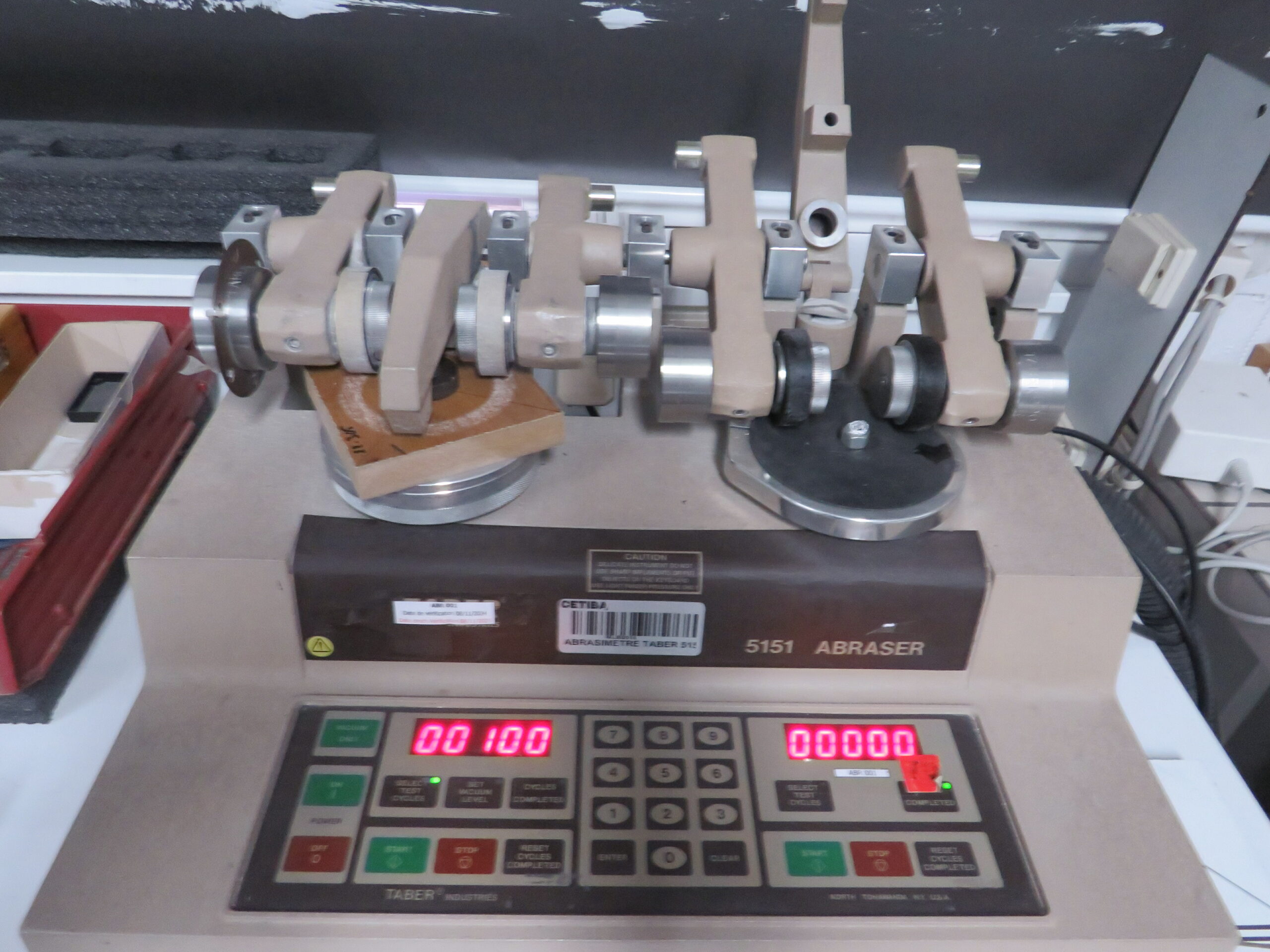
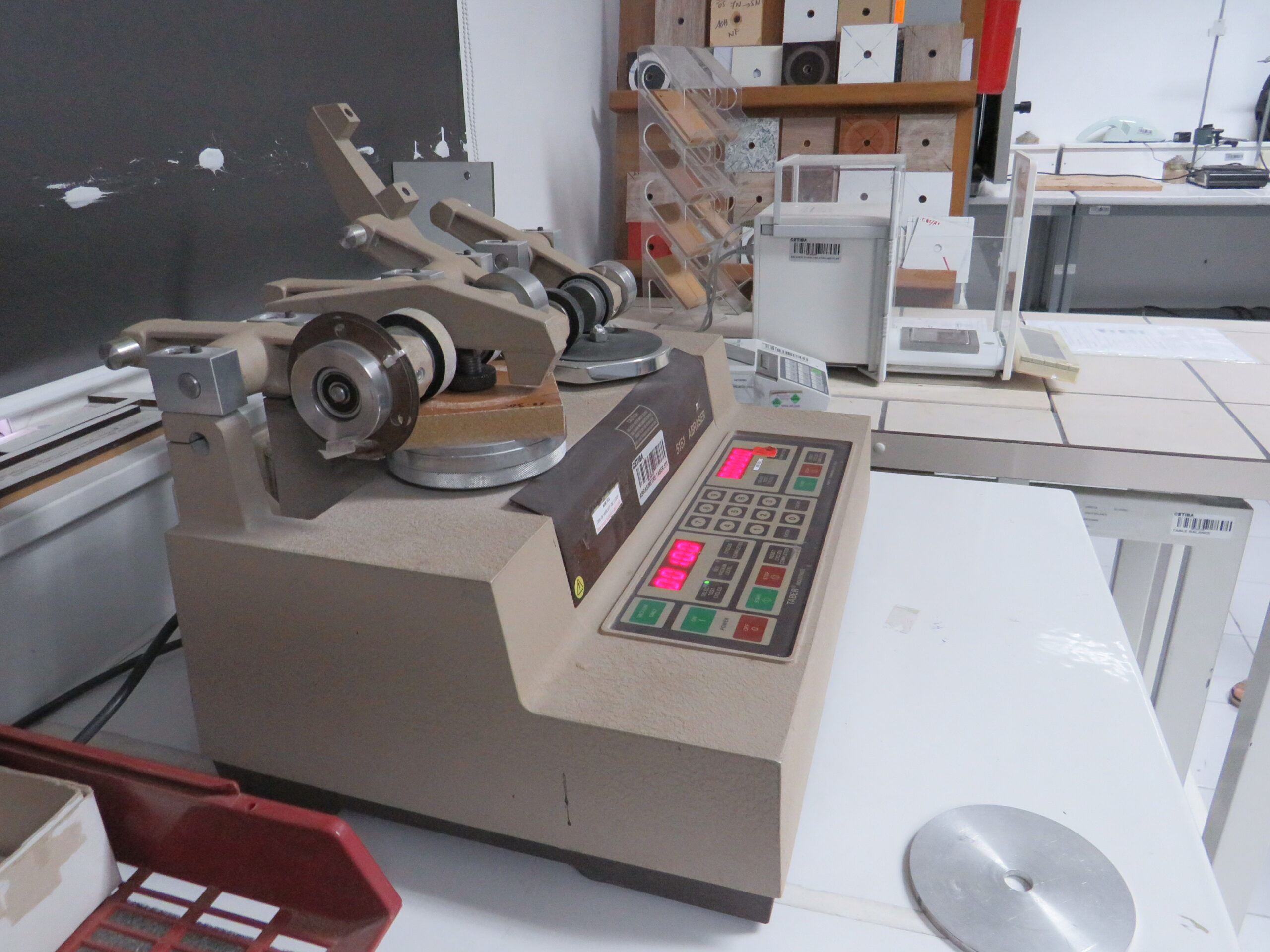
The purpose of this test is to verify the wear behavior of finishes subjected to a defined abrasion, by determining the onset of wear.
Corrosion resistance test
The purpose of the test is to verify the behavior of organic coatings applied to metal substrates when subjected to accelerated corrosion by an artificial salt spray of a defined composition under specific temperature and pressure conditions.
Stress crack resistance
The purpose of this test is to visually determine the resistance to stress cracking.
Light resistance
The purpose of the test is to verify the surface's resistance to light by exposing it to a defined artificial light source.
The test is carried out in an accelerated aging chamber using XENON light, which artificially reproduces the full solar spectrum and thus simulates the deterioration caused by solar radiation and weathering in an accelerated manner. These customized cyclic tests provide a better understanding of resistance to the solar spectrum.
Scratch resistance
The purpose of this test is to verify the scratch resistance of finishes by visually examining the residual mark caused by a scratching point applied with a given force.
Thermal shock test
The purpose of this test is to verify the behavior of the product (finish, materials, electronic components, etc.) when subjected to sudden climate changes between cold conditions (temperatures as low as -80°C) and hot conditions (temperatures as high as 220°C). The test is carried out in a thermal shock chamber, consisting of two chambers, one for negative temperatures and the other for positive temperatures.
Climate variation test
Temperature and humidity influence the lifespan of a material or product.
Our climatic chambers allow you to simulate hot/cold/humid environments in accordance with specifications or applicable standards in order to better understand the aging and behavior of the products being tested (finish, materials, electronic components, etc.) at one or more temperature/humidity combinations.
Resistance to immersion in boiling water
The purpose of this test is to determine the effect of immersing the test specimens in boiling water for 2 hours.
Climate shock resistance
The purpose of this test is to visually determine any changes in the mechanical properties of test specimens subjected to a cycle of rapid changes in temperature and relative humidity.
Impact resistance of a large-diameter ball
The purpose of this test is to determine the impact resistance of the laminate coating by studying the deformation caused by dropping a weight onto the coated test piece.
Impact resistance of a small-diameter ball
The purpose of this test is to determine the impact resistance of high-pressure decorative laminate by studying the deformation caused by dropping a steel weight onto the coated test piece.
Resistance to cigarette burns
The purpose of this test is to determine the behavior and observe any damage to the coating caused by cigarette burns under defined conditions.
Stain resistance
The purpose of this test is to determine the effect of staining agents on the surface.
Resistance to water vapor
The purpose of this test is to verify the behavior of the laminate coating when exposed to boiling water vapor.
Surface resistance to dry heat in an oven at 70°C
The purpose of this test is to verify, by visual inspection, the behavior of finishes when exposed to dry heat in an oven.
Surface resistance to dry heat
The purpose of this test is to verify the behavior of the surface of a coating when exposed to dry heat following contact with a material of defined thermal capacity, but which cools during contact.
Resistance in humid environments
The purpose of this test is to determine the long-term influence of moisture exposure on coated test specimens.
Color stability under artificial light
The purpose of the test is to verify the surface's resistance to light by exposing it to a defined artificial light source.
Dimensional stability at ambient temperature
The purpose of this test is to measure lateral dimensional variations in test specimens due to variations in relative humidity at ambient temperature.
Dimensional stability at high temperatures
The purpose of this test is to measure the lateral dimensional variations of the test specimens in an extreme range of relative humidity at high temperatures.